
Causes, Prevention, and Modern Treatment
After orthodontic treatment, the teeth are often harmoniously aligned with the chewing muscles and jaw joints — a functional success.
However, some patients notice white, yellowish, or brownish spots on their teeth after the removal of fixed braces. These so-called white spot lesions (demineralization spots) can be aesthetically disturbing.
But what exactly are white spot lesions, why do they occur, and what can be done about them?
What Are White Spot Lesions?
A white spot lesion is a deep demineralization of the tooth enamel.
Minerals are lost not only from the surface but also from deeper enamel layers. Although the tooth may partially remineralize on its own, it cannot return to its original structure.
As a result:
- light refraction of the tooth changes
- white, yellowish, or brown discolorations become visible
- the tooth appears aesthetically compromised
Without remineralization, these areas would develop into dental caries (cavities).
What Causes White Spot Lesions?
The main cause of white spot lesions is insufficient oral hygiene, especially during treatment with fixed braces.
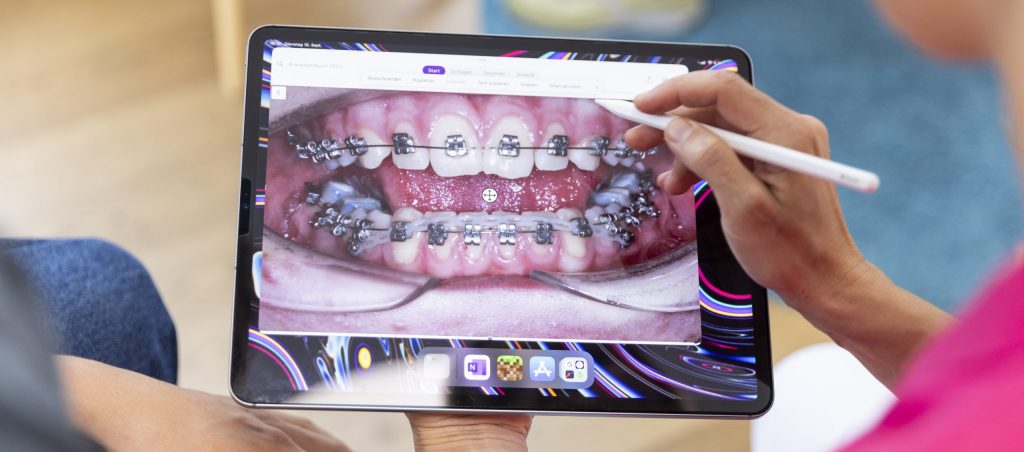
Around orthodontic brackets — whether metal or ceramic — plaque accumulates very quickly. These deposits are:
- difficult to remove with a regular toothbrush
- especially persistent underneath the archwire
- an ideal breeding ground for acid-producing bacteria
If plaque remains on the teeth for a prolonged period, the enamel begins to demineralize.
Which Cleaning Aids Are Important During Braces Treatment?
In addition to daily tooth brushing, additional tools are essential:
- interdental brushes
- special orthodontic floss (e.g. Superfloss)
- fluoride gels or mouth rinses when indicated
Only with these aids can critical areas around brackets be cleaned effectively.


What Do We Do Preventively in Our Practice in Wolfratshausen?
At our orthodontic specialist practice in Wolfratshausen, we place great emphasis on excellent oral hygiene throughout orthodontic treatment.
Our preventive measures include:
- fixed braces are placed only when oral hygiene is adequate
- targeted oral hygiene instruction if deficits are present
- hygiene assessment at every follow-up appointment
- active involvement of parents for children and adolescents
- close cooperation with the patient’s general dentist
- professional dental cleanings upon request
Good oral hygiene is the most important prerequisite for healthy, beautiful teeth after braces.
Are There Additional Ways to Prevent White Spot Lesions?
Yes. One highly effective preventive measure is smooth surface sealing (enamel sealing) before starting treatment with fixed braces.
The tooth surfaces where brackets will later be bonded are sealed with a fluoride-containing resin layer.
Benefits:
- additional enamel protection
- significantly reduced risk of white spot lesions
- particularly beneficial for adolescents
Important to note:
Enamel sealing does not replace good oral hygiene — it is an effective supplement.
Can White Spot Lesions Be Removed?
Partially. White spot lesions cannot be completely erased, but they can be significantly improved aesthetically.
At our practice, we offer the modern ICON® resin infiltration treatment.
ICON® Infiltration:
- a special resin penetrates deep into the demineralized enamel
- light refraction is balanced
- white spots become much less visible or nearly invisible
This minimally invasive treatment is ideal for:
- white spot lesions after braces
- aesthetic correction without drilling
- adolescents and adults
Conclusion: White Spot Lesions Can Be Prevented — and Treated
White spot lesions are a common but largely preventable side effect of orthodontic treatment.
With good oral hygiene, professional monitoring, optional enamel sealing, and modern ICON® therapy, both the risk and appearance of white spot lesions can be significantly reduced.
At our orthodontic practice in Wolfratshausen, we are happy to advise you individually on the prevention and treatment of white spot lesions after braces.