
When Teeth Do Not Match the Jaw Joints – Understanding a Bad Bite
“My teeth are straight, so my bite must be fine.”
This is what many people believe about their own bite — but unfortunately, this is rarely true.
A bad bite often has little to do with crooked teeth and much more to do with how the teeth function together with the jaw joints (TMJ) and the chewing muscles.
Studies suggest that 10–20% of the population suffers from a dysfunctional bite without being aware of it. Symptoms are often non-specific, may begin early in life, and tend to worsen over time.
This article explains what a bad bite really is, why it is so often overlooked, and which typical and atypical symptoms may indicate an underlying problem.
What Is a Bad Bite?
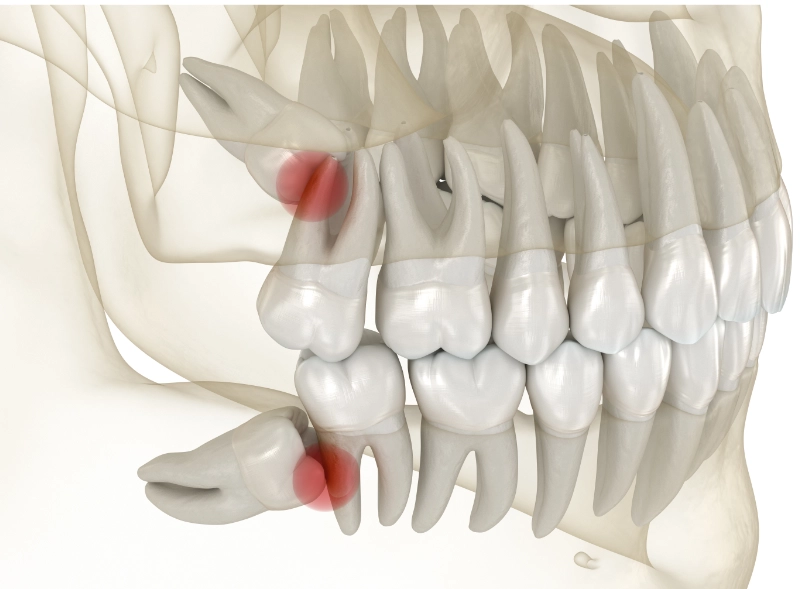
A bad bite means that the teeth and jaw joints do not work in harmony.
This is often caused by:
- individual teeth making premature contact when closing
- unfavorable tooth positions
- a shifted lower jaw
- altered jaw joint position
- an incorrect chewing pattern
- chronic muscle tension in the masticatory system
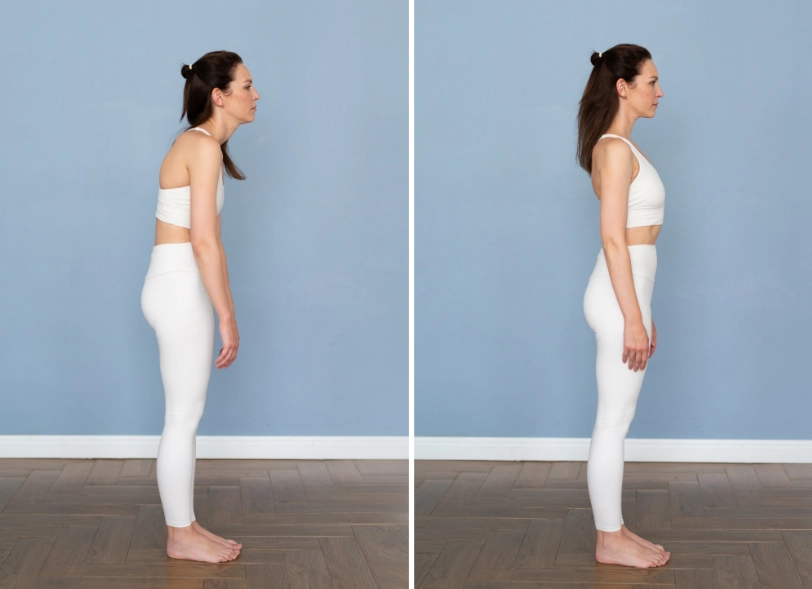
- functional issues such as mouth breathing or postural imbalance
- previous accidents involving high impact to the cervical spine
Even a single premature contact of less than 0.1 mm is enough to push the lower jaw out of its natural position.
The body can compensate for this imbalance for years — sometimes decades — until symptoms finally appear.


Why a Bad Bite Often Goes Unnoticed
Many patients are surprised to learn that their bite is dysfunctional even though their teeth look straight. There are several reasons for this:
1. Straight Teeth ≠ Healthy Bite
Even perfectly aligned teeth can be incompatible with the jaw joints.
Most functional disorders can only be detected through specialized diagnostics such as:
- T-Scan digital bite analysis
- 4D jaw joint movement analysis
- 3D cone beam CT (CBCT)
- digital functional diagnostics
These problems are usually not visible from the outside.
2. Symptoms Are Often “Atypical”
Many people do not associate their symptoms with their teeth or bite.
Typical symptoms include:
- jaw joint clicking
- pain while chewing
- tight chewing muscles
- limited mouth opening
- teeth grinding and clenching
Atypical symptoms include:
- frequent headaches or migraines
- tension headaches
- neck and shoulder pain
- back pain
- tinnitus, ear pain, hearing issues
- dizziness
- facial pain (e.g., trigeminal neuralgia)
- sleep disorders or depression
- eye pain
- numbness in the hands
- pelvic tilt or shoulder imbalance
Who would think of teeth when suffering from migraines or tinnitus?
3. Young People Compensate Well
Children and adolescents often show:
- only mild headaches
- rare neck discomfort
- minimal jaw joint noises
Their bodies can still compensate efficiently.
However, this ability decreases with age.
This is why symptoms often appear between the ages of 25 and 45, especially when stress, work, and daily strain increase.
4. Grinding and Clenching Are Often Blamed on Stress
Stress does play a role — but:
👉 Teeth grinding and clenching are very often signs of a bad bite.
When teeth do not fit harmoniously, the brain continuously tries to find a “correct” bite position during sleep.
This can lead to:
- severe tooth wear
- fractured teeth
- sensitive tooth necks
- jaw joint pain
- increased muscle tension
A bad bite can therefore remain undetected for years while symptoms steadily worsen.
How Does a Bad Bite Develop?
A bad bite often starts with minor irregularities that gradually worsen, such as:
- displaced jaw joints
- premature tooth contacts
- rotated or tilted teeth
- crowding
- missing teeth
- faulty fillings or crowns
- unfavorable jaw shape
- functional issues involving tongue posture, breathing, or posture
Even small deviations can be enough to:
- shift the lower jaw
- overload muscles
- irritate joint structures
How Can a Bad Bite Be Diagnosed?
With modern diagnostics, a dysfunctional bite can now be identified early and precisely.
Key diagnostic tools include:
- 4D jaw joint movement analysis
- T-Scan digital occlusion analysis (micrometer precision)
- 3D CBCT imaging
- digital intraoral scanning
- bone mapping
- analysis of the individual hinge axis
These methods allow accurate detection of premature contacts, joint displacement, and functional disorders.
Why KFO360° Is Superior for Treating a Bad Bite
The KFO360° concept, developed by Dr. Theresa Jilek, offers a holistic solution:
- teeth are aligned along the individual jaw joint axis
- the bite is optimized both functionally and aesthetically
- harmful loading forces are minimized
- muscles and joints are relieved
- symptoms can significantly improve or disappear
Only when teeth and jaw joints work in harmony can the following be achieved:
✔ a stable bite
✔ healthy chewing and body mechanics
✔ reduced pain
✔ improved quality of life
Conclusion: A Bad Bite Is Often Invisible — but Clearly Noticeable
Many people live for years with a dysfunctional bite without realizing it.
Both typical and atypical symptoms are often attributed to other causes.
With modern diagnostics and the holistic KFO360° approach, the true causes can be identified and treated sustainably.
When teeth fit the jaw joints, the result is:
- a healthy bite
- relaxed muscles
- daily comfort without pain
- long-term stability